Urban mobility is changing faster in 2025 than at any point since the mass adoption of the automobile a century ago. The forces driving this change are technological, economic, social, and political — and their effects are visible in every major city on the planet. Here is our analysis of the seven most significant trends reshaping how people move through cities this year.
1. The Hybrid Work Commute Is the New Normal
The most consequential change in urban mobility over the past five years is not a technology — it is a work pattern. Hybrid work, in which employees split their time between office and home, has become the dominant model for professional workers in most developed economies. In the United States, surveys consistently show that 50-60 percent of office-capable workers have some form of hybrid arrangement, with the most common pattern being 2-3 days per week in the office.
This shift has profound mobility implications. Hybrid workers commute less frequently but more intentionally — they plan their commutes around specific in-office days, often coordinating with colleagues to align their office presence with collaborative work. This behavioral shift is creating new opportunities for carpooling platforms like GoPool, which can now leverage schedule predictability to create stable, recurring carpool relationships rather than relying on ad-hoc matching.
2. Electric Vehicle Adoption Is Accelerating
Electric vehicle adoption in the United States reached 9 percent of new vehicle sales in 2025, up from less than 2 percent in 2020. The acceleration is being driven by rapidly falling battery costs, an expanding range of models across price points, and the buildout of public charging infrastructure. In urban markets, where commute distances are shorter and at-home or workplace charging is more accessible, EV adoption rates are substantially higher — running at 15-20 percent of new registrations in major California metro areas.
The proliferation of EVs is transforming the economics of personal mobility in ways that benefit both individual commuters and the broader transportation system. Lower operating costs, quieter cabins, and smoother acceleration are changing the quality of the driving experience. Integration with smart home and smart office energy systems is enabling new forms of vehicle-to-grid optimization that turn EV batteries into distributed energy resources. And the combination of EVs with carpooling is producing the near-zero-emission per-person commutes that city climate targets require.
3. Micromobility Is Filling the First/Last Mile Gap
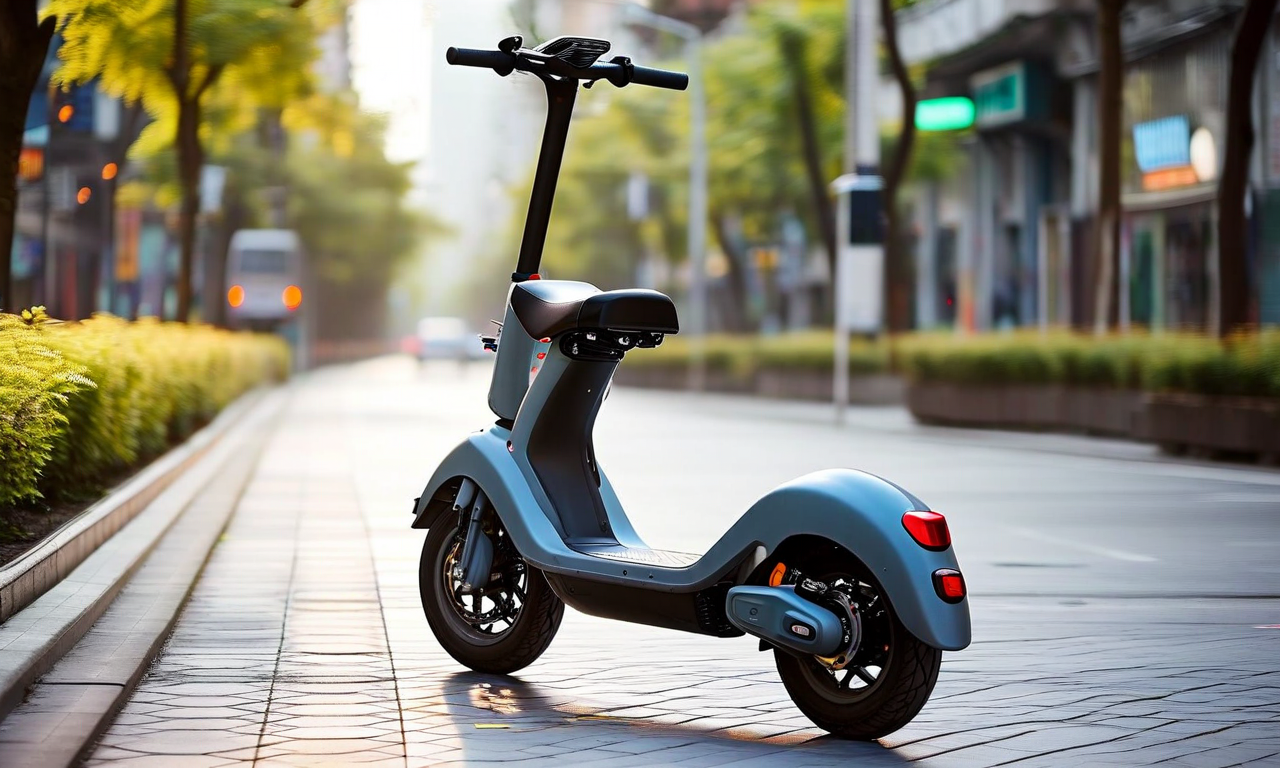
E-scooters and e-bikes have matured from a venture-capital-fueled novelty into a mainstream mobility option in dozens of American cities. In cities with mature micromobility ecosystems — including San Francisco, Seattle, Chicago, and Denver — e-bike and e-scooter trips now account for 3-8 percent of all urban trips under three miles. These modes are particularly valuable for solving the "first and last mile" problem: connecting commuters between transit stations or carpool drop-off points and their final destinations.
Micromobility's integration with carpooling platforms represents a significant opportunity. GoPool users can now plan multi-modal commutes that combine carpooling for the highway portion of their journey with e-bike or e-scooter rental for the urban last mile. Our platform's integration with major bikeshare networks in GoPool markets allows users to plan and track their complete door-to-door journey within a single interface.
4. Congestion Pricing Is Expanding
New York City made history in 2024 by implementing the first comprehensive congestion pricing scheme in the United States, charging vehicles entering Manhattan's central business district during peak hours. The program's early results have been encouraging: a 20 percent reduction in vehicle entries to the congestion zone during peak hours, with bus speeds improving significantly in the affected area.
New York's success has accelerated conversations in other major cities. Los Angeles, Chicago, San Francisco, Boston, and Seattle are all at various stages of studying or piloting congestion pricing programs. The political challenges are substantial — tolling systems are unpopular with drivers and require significant regulatory authority — but the evidence from global cities that have implemented congestion pricing is compelling enough that policy momentum is building.
For carpooling, congestion pricing is a powerful enabler. When entering a congested urban core costs $10-15 per vehicle during peak hours, the financial incentive to share that cost with a carpool partner becomes immediate and concrete. GoPool's cost-splitting system can automatically incorporate congestion charges into the per-rider cost calculation, making the savings from carpooling visible at every trip.
5. Transit Agencies Are Embracing Partnerships
After years of viewing ridesharing platforms as threats to transit ridership, transit agencies are increasingly embracing partnerships with mobility technology companies. The shift reflects a growing recognition that the "first/last mile problem" — connecting transit systems to people's homes and workplaces — is better solved through technology partnerships than through expanding fixed-route bus service into low-density areas where it is cost-inefficient.
GoPool has initiated conversations with two metropolitan transit agencies about integration programs that would route car commuters to park-and-ride facilities where they can pick up transit for the urban portion of their journey. These programs combine the flexibility and cost-effectiveness of carpooling for suburban highway segments with the high capacity and low per-person emissions of rail transit for urban cores.
6. Employer Mobility Benefits Are Evolving
The traditional employer commuter benefit — a monthly transit pass subsidy — is being supplemented and in some cases replaced by more flexible mobility benefit programs. Leading employers are experimenting with mobility benefit platforms that give employees a monthly allowance to spend across multiple modes: transit passes, bikeshare memberships, carpooling credits, and even scooter rental credits. This flexibility better accommodates the reality of hybrid work schedules, where the optimal commute mode may vary by day depending on meeting schedules, weather, and personal circumstances.
GoPool for Teams is designed to integrate with these evolving benefit structures. Employers can allocate carpooling credits directly to employee accounts, which are applied automatically against their cost-splitting obligations. This framing — carpooling as a benefit, not just a cost-sharing arrangement — changes the psychological equation for employees considering whether to try carpooling for the first time.
7. Sustainability Reporting Is Driving Behavior
New corporate sustainability disclosure requirements are creating powerful institutional incentives to reduce commuting emissions. The SEC's climate disclosure rules, effective in 2025 for large accelerated filers, require reporting of Scope 3 emissions — which includes employee commuting. Similar requirements apply to EU-listed companies under the Corporate Sustainability Reporting Directive.
For large employers with tens of thousands of commuters, Scope 3 commuting emissions are material sustainability figures that appear in annual reports and are reviewed by investors, analysts, and regulators. Reducing these figures through carpooling programs is now an imperative that reaches the CFO and sustainability committee level, not just the HR benefits team. This is driving significantly increased interest in GoPool's enterprise programs among publicly traded companies.
The convergence of these seven trends is creating the conditions for a genuine transformation in urban mobility. The car is not going away — but the era of the single-occupancy vehicle as the default commuting choice is drawing to a close. The future belongs to shared, efficient, and increasingly electrified urban mobility — and GoPool is building the platform that makes that future accessible to everyone.
GoPool Research Team draws on public data from USDOT, US Census Bureau, EPA, and proprietary platform analytics for this analysis.